


Why are gas prices rising right now? The Iran conflict and Strait of Hormuz explained
Our in-house economist explains what’s behind the latest jump in gas prices and what drivers should know.

Dr. Thomas Weinandy


Why are gas prices rising right now? The Iran conflict and Strait of Hormuz explained
Our in-house economist explains what’s behind the latest jump in gas prices and what drivers should know.

.png)

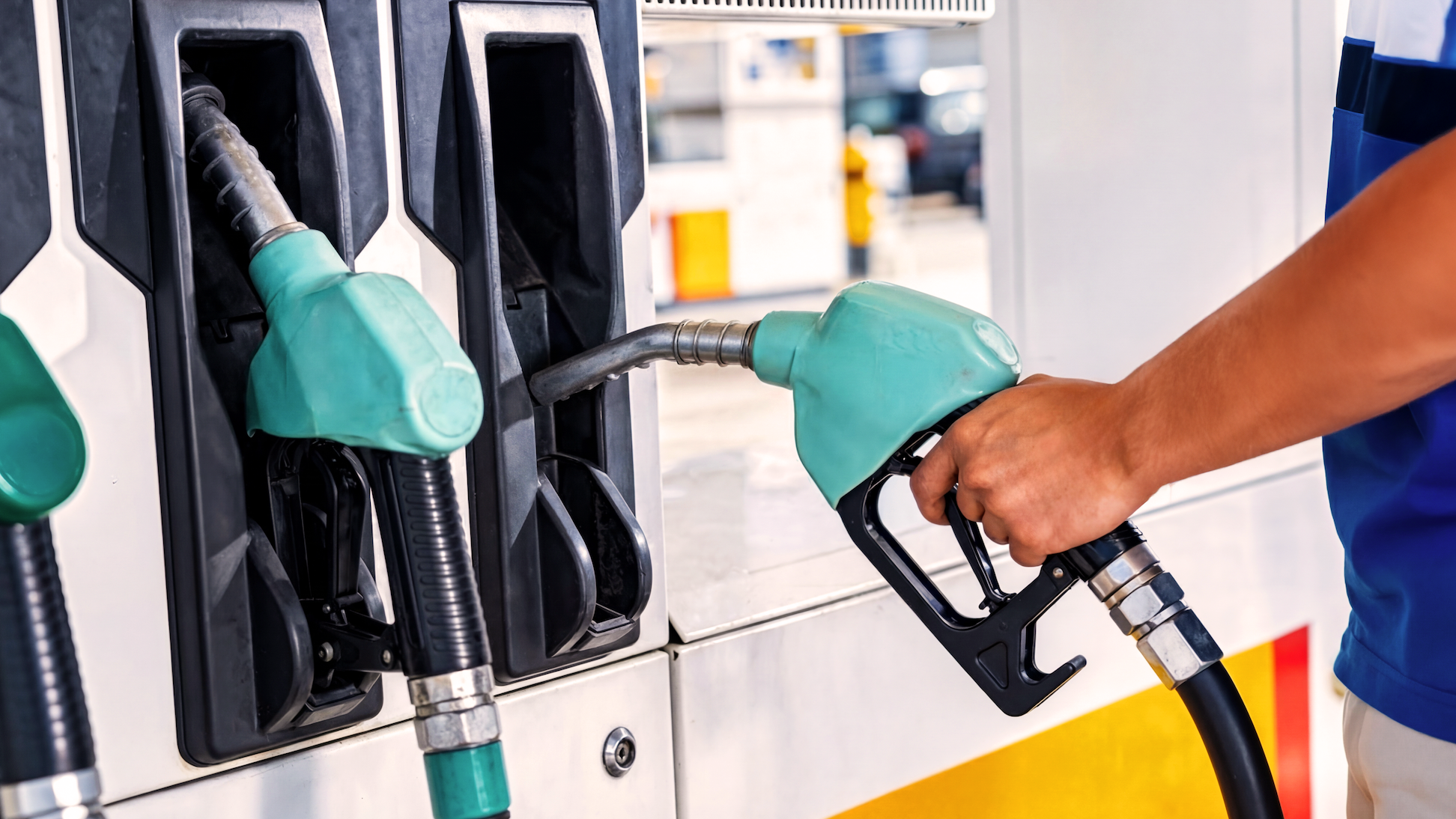
Gas prices are rising again, and many drivers are asking why.
Two main forces are responsible. First, the ongoing war in the Middle East has shocked the market and raised serious concerns about the supply of fuel. Second, seasonal factors are playing a role — though to a much lesser extent than global conflict. The combined force of these two factors is moving prices at the pump quickly.
Here is a closer look at what’s happening and what it could mean for drivers.
Where gas prices stand today and why they’re going up
At the time of publication on March 11th, the average price for a gallon of regular gas in America is $3.58, according to AAA.
That price changes daily, but it tends to follow the same underlying driver: crude oil.
Crude usually accounts for 50% to 60% of the cost of gasoline, making it the biggest factor influencing prices at the pump. When oil prices rise, gasoline prices usually follow.
Today, the price of West Texas Intermediate (WTI) crude oil, the American benchmark, is just above $86 per barrel. That’s down from its high earlier in the week, when a barrel of WTI crude pushed $110. But it’s still considerably higher than its pre-war level, as it fluctuated between $60 and $65 per barrel for most of February.
Even small changes in oil markets can quickly affect what drivers pay — and frankly, what we’re seeing now is a big change.
Is the Iran conflict raising gas prices?
Yes, the current war involving the United States, Israel, and Iran is dramatically influencing global oil markets.
Energy markets react quickly to geopolitical instability, especially in regions that produce or transport large amounts of oil. Even the risk of supply disruption can cause oil prices to rise. Traders and energy companies often adjust prices based on what they expect might happen, not just what has already occurred.
Iran plays an important role in global oil markets, as it is situated along the important Strait of Hormuz, an important passageway for crude oil. Fighting in the region has included attacks on oil tankers, and there is tremendous uncertainty about when passage through the Strait will be safe again. That has led to increased uncertainty about the global fuel supply.
What is the Strait of Hormuz, and why does it matter?
The Strait of Hormuz is the most important oil shipping route in the world.
About 20% of global oil supply passes through this narrow waterway, which connects oil producers in the Persian Gulf to global markets. Because so much oil moves through this route, any threat to shipping in the area can affect oil prices worldwide.
If markets believe shipments could be disrupted, oil prices often rise quickly. Higher oil prices then flow through to gasoline prices, typically in two to four days or even faster when prices are rising quickly.
Are any other factors pushing gas prices higher?
In addition to the conflict in the Middle East, anticipated seasonal effects are also pushing gas prices higher.
From year to year, we see similar trends in driving behavior and fuel volume. During the coldest winter months, gasoline demand is at its lowest. Fewer drivers hit the roads during the winter. Demand begins increasing in the spring, reaching its peak during the summer driving season.
As we’re beginning this upward climb to peak demand in the summer, fuel refineries are also preparing to switch to summer gasoline blends, which are designed to reduce air pollution in warmer temperatures. These blends cost more to produce, which can push prices higher.
Those two factors — higher demand from drivers, coupled with higher costs of production and spring refinery maintenance — often lead to rising prices during this time of year.
Again, these effects are having a much lesser impact than the war is, but they are still notable and expected.
Why gas prices rise quickly but fall slowly
Many drivers notice that gas prices tend to rise quickly but decline more gradually. This pattern is largely due to how fuel markets work.
When wholesale fuel prices increase, gas stations have conflicting priorities. On one hand, they have to smooth out rapid price increases to avoid shocking consumers with dramatically higher sign prices from one day to the next. On the other, though, they also need to stay in business. For those reasons, retailers will often adjust prices up more quickly to avoid selling fuel at a loss, and then decrease prices more slowly to ensure they can cover their own operating costs.
Other factors also play a role:
- Gas stations compete with nearby stations
- Fuel in storage was purchased at earlier wholesale prices
- Local market conditions vary
Just like drivers, though, gas stations prefer stability over volatility. Retailers don’t like high prices, either.
How high could gas prices go?
Predicting gas prices is difficult because many factors influence fuel markets. Generally speaking, prices could move higher if:
- The ongoing war escalates.
- Shipping routes like the Strait of Hormuz do not open soon.
- Domestic oil refineries undergo spring maintenance.
Energy markets can react quickly to new developments. At the same time, markets also adjust quickly when supply conditions improve.
When could gas prices fall again?
Gas prices usually decline when oil prices fall or demand slows. Several factors could help stabilize prices:
- The fighting in the Middle East ends, and the Strait of Hormuz re-opens.
- Oil-producing countries commit to increased production.
- In the longer term, lower seasonal demand in the fall and winter will lead to lower prices.
Because global energy markets are interconnected, changes can take time to work through the system.
What drivers can do when gas prices rise
While drivers cannot control oil markets, there are ways to reduce fuel spending. Helpful strategies include the following:
- Compare nearby gas stations for lower prices.
- Use cash back apps and loyalty programs on fuel purchases.
- Drive smoothly and avoid aggressive acceleration.
- Combine errands to take fewer trips.
Frequently asked questions
Why are gas prices rising right now?
Gas prices are rising primarily due to higher oil prices caused by the war in the Middle East. To a lesser extent, anticipated seasonal factors — greater demand from drivers, and the higher production costs associated with summer-blend fuel — are also playing a role.
Is the Iran conflict affecting gas prices?
Yes. War in the Middle East has currently blocked traffic through the Strait of Hormuz off the southern coast of Iran. Even if the strait re-opens soon, it will take time for the global supply to re-normalize.
What is the Strait of Hormuz?
The Strait of Hormuz is the world's most important oil shipping route, connecting Persian Gulf producers to global markets through a narrow passage only 21 nautical miles wide. About 20% of the world’s oil passes through it. Since the United States and Israel attacked Iran at the end of February, traffic through the Strait of Hormuz has virtually stopped.
Could gas prices spike further?
Prices will likely rise the longer the Strait of Hormuz remains closed. Domestically, other factors like refinery maintenance could reduce fuel production and push prices higher.
When will gas prices go back down?
Prices often decline when oil prices fall, supply increases, or seasonal demand decreases.
Share this article:
Dr. Thomas Weinandy

Dr. Weinandy is a Principal Research Economist at Upside, providing valuable insights into consumer spending behavior and macroeconomic trends for the fuel, grocery, and restaurant industries. With a Ph.D. in Applied Economics, his academic research is in digital economics and brick-and-mortar retail. He recently wrote a book on leveraging AI for business intelligence.
Similar articles




Request a demo
Request a demo of our platform with no obligation. Our team of industry experts will reach out to learn more about your unique business needs.


