What we cover

In 2025, one theme kept surfacing across our research: the customers walking through your doors are less predictable than they used to be. They're comparing prices on their phones before they leave the house. They're spreading trips across more stores. And they're responding to personalized value in ways that blanket discounts can't match.
Every year, Upside analyzes billions of transactions from tens of thousands of businesses and shares what we learn with our retail partners and the public. In 2025, the pieces that resonated most all circled back to the same question: How do you grow when your customers won't stay put?
Here are the key articles and series that readers came back to most.
Fuel Trends by Upside
Our monthly Fuel Trends series was consistently one of the most-visited destinations on the Upside blog in 2025. Each month, we look back at fuel and c-store data from the prior month to report on the numbers and tell a deeper story behind them. Whether it was a refinery fire disrupting spring margins, hurricane season shifting regional demand, or cheaper oil pushing fuel margins to their highest levels in two years, the series gave fuel retailers a timely, data-driven look at what was happening in their industry and why it mattered.
What 3,700 consumers told us about digital habits and loyalty
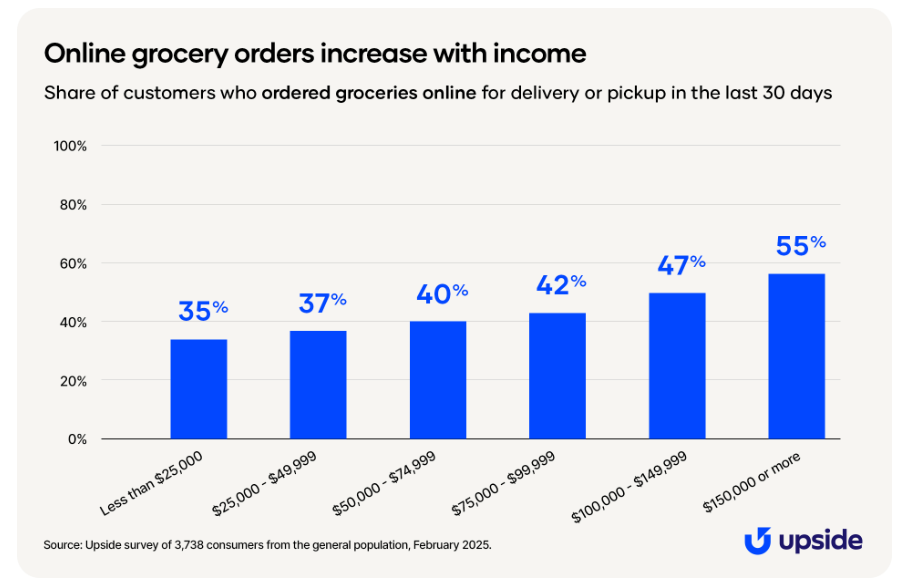
A decade ago, consumer loyalty was simple. People shopped at the same stores out of habit. Today, they use digital tools to compare their options before every trip, and the predictability retailers once relied on is gone. Our survey of 3,700 consumers found that nearly 90% still shop for groceries in-store, but their path to the store now runs through smartphones, search engines, and social media. Digital shopping behavior increases with income (by one percentage point for every $10,000 in household income) and is most common among Millennials ages 35 to 44.
The bottom line: Nearly 80% of customers today are uncommitted, and meeting them in digital channels is no longer optional.
The digital behavior of uncommitted grocery shoppers
At GroceryTech 2025, Upside's Dr. Thomas Weinandy presented new research on the uncommitted customer, and this blog captured the highlights. The numbers were striking: Uncommitted customers make up 93% of all grocery shoppers, yet 53% of grocers don't believe a meaningful portion of their customers fall into that category. Digitally engaged shoppers are 11 percentage points more willing to act on a one-time promotion than their in-person counterparts, and they compare prices across stores at higher rates. If grocers could get those uncommitted customers to visit just one more time per month, it could represent an 84% increase in annual revenue.
Smart personalization helps grocers win back the basket
When 81% of grocery shoppers are comparing prices across stores, the temptation is to compete on price alone. This blog explored a better path: personalized promotions that bring new customers through the door without the long-term costs of mass discounting.
Consumer price sensitivity and cross-shopping
This excerpt from Upside's Consumer Spend Report took a close look at why customers are spreading their trips across more businesses. Price is the dominant factor. Among grocery shoppers, 81% compare costs across stores, and the average shopper belongs to more than two different loyalty programs. Even 63% of diners compare prices between restaurants before choosing where to eat. For fuel retailers, the competitive landscape is even more crowded, with grocery stores, wholesale clubs, and big-box retailers all vying for fill-ups that once went to standalone stations.
Idle pumps, lost profits: How to capture more gallons without adding sites
For years, the fuel industry's growth playbook was straightforward: build more sites. But with American fuel demand down 4% from its 2018 peak, that strategy doesn't deliver the way it used to.
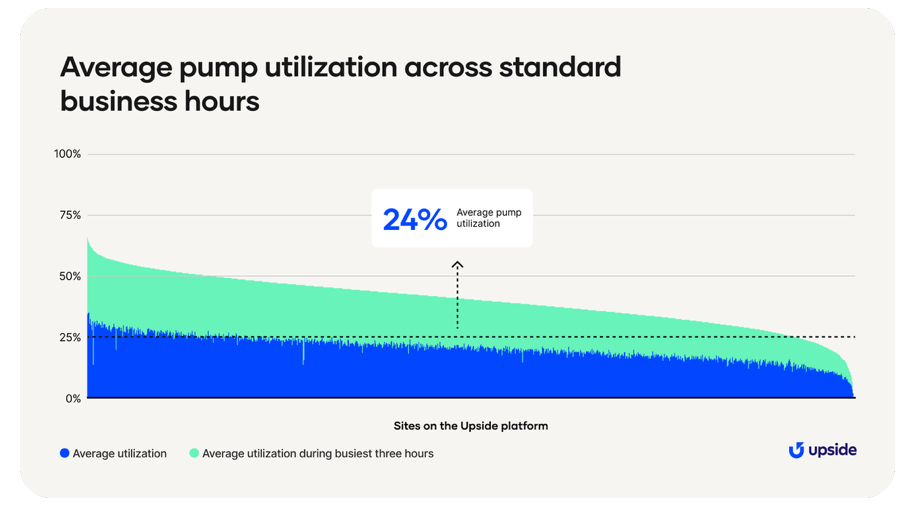
This blog introduced a different framework: capacity utilization. During standard business hours, the average station's pumps are only being used at 24% capacity. Even during peak hours, they sit idle more than half the time. Rather than building new sites, fuel retailers can grow by filling those empty pumps with incremental transactions, the same way airlines grow revenue by filling empty seats on flights that are already scheduled to depart.
How inflation impacts retail sales numbers
Topline revenue can be deceiving. This blog challenged retailers to look beyond their headline sales numbers and adjust for inflation, and what it revealed wasn't always encouraging. Year-over-year grocery revenue appeared relatively stable, but a two-year lookback showed it had actually declined by about 6% in real terms. Convenience stores faced an even starker picture: inflation-adjusted revenue was down 12% year-over-year, and average daily transactions were falling in tandem. For retailers who assumed that steady sales meant steady growth, it was an important reality check.
Variable pricing strategies and consumer perceptions
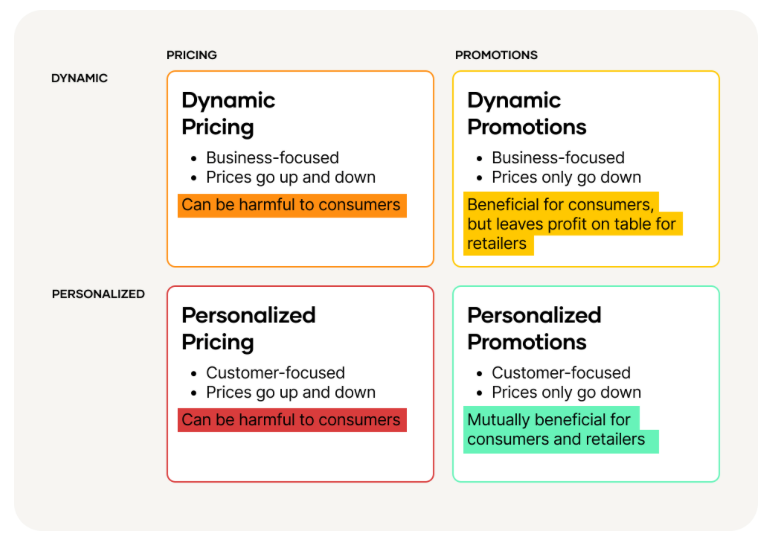
Dynamic pricing landed in the public conversation in a big way in recent years, and this blog explored what consumers actually think about it. The data showed a clear split. Only 25% of respondents said they prefer retailers who use dynamic pricing, largely because they associate it with surge pricing. Personalized promotions told a different story: about 45% of consumers said they prefer retailers who offer personalized deals, and 59% said those promotions can benefit both shoppers and businesses.
With economists estimating that personalized promotions could unlock an additional 19% in profit for brick-and-mortar retailers, the opportunity gap between these two strategies is significant.
Looking ahead
If there's a single thread connecting these pieces, it's this: the retailers who grew in 2025 weren't the ones with the biggest budgets or the most locations. They were the ones who understood how their customers were actually behaving and found ways to meet them there.
That means recognizing that 80% of your customers are uncommitted. It means looking past topline revenue to understand what's really happening with demand. And it means using data to deliver the right value to each individual shopper, not just a blanket discount and a hope that they come back.
We're already deep into our 2026 research, and the trends are only accelerating. If you want to stay ahead of them, subscribe to Upside's LinkedIn newsletter for the latest insights, or explore how Upside can help your business win more visits from uncommitted customers.